C35: features, indications, and use of the hyperextension orthopedic brace
General Introduction
The C35 hyperextension brace is an orthopedic device used for the treatment and stabilization of various spinal conditions, particularly those affecting the thoracic and lumbar regions. It is a rigid orthosis designed to limit forward bending of the trunk and promote an extended posture, reducing load on the anterior vertebrae.
This type of brace is mainly used in the conservative management of vertebral fractures, advanced osteoporosis, and certain degenerative spinal conditions. Thanks to its specific structure, the C35 hyperextension brace supports the spine and aids the healing process by maintaining proper trunk alignment.
The use of a hyperextension brace like the C35 is often part of a broader therapeutic pathway that includes specialist monitoring and progressive adjustments of the orthopedic support.
What Is the C35 Hyperextension Brace
The C35 hyperextension brace is a rigid orthopedic brace that belongs to the category of three-point pressure spinal orthoses. Its structure is designed to create a system of forces that keeps the spine in extension and limits movements that could worsen an injury or deformity.
The name C35 identifies a specific model of hyperextension brace used in technical orthopedics for the treatment of spinal conditions.
The device typically includes:
- an anterior sternal pad
- a lower pelvic or pubic support
- a posterior dorsal plate
- adjustable lateral bars
This system creates a stabilizing effect that reduces trunk flexion and promotes proper spinal alignment.
Biomechanical Function of the Brace
The main goal of the C35 hyperextension brace is to limit spinal movements that could increase stress on injured or weakened vertebrae.
The brace works according to the biomechanical principle of three-point pressure, which helps control trunk position:
- anterior pressure on the sternum
- lower anterior pressure on the pelvis
- posterior counterforce on the thoracolumbar region
This system promotes spinal extension and helps reduce stress on the anterior part of the vertebrae.
The result is greater spinal stability and reduced pain during daily movements.
Clinical Indications
The C35 hyperextension brace is primarily used to treat conditions that require stabilization of the thoracolumbar spine.
Common indications include:
- vertebral compression fractures, often related to osteoporosis
- traumatic vertebral collapse
- stable thoracic and lumbar fractures
- certain forms of kyphosis
- post-operative spinal care
In these cases, the brace helps maintain proper posture and limits movements that could interfere with healing.
Symptoms and Conditions Treated
Conditions requiring the use of a C35 hyperextension brace are often associated with symptoms that affect quality of life.
Common ones include:
- back pain
- difficulty maintaining an upright posture
- limited trunk movement
- reduced mobility in daily life
The brace supports the spine and reduces stress on injured vertebrae, helping improve comfort during everyday activities.
Diagnostic Pathway
Prescription of a C35 hyperextension brace follows a specialist evaluation. An orthopedic doctor or neurosurgeon assesses the condition of the spine and determines the most appropriate treatment.
The diagnostic process may include:
- orthopedic or neurosurgical examination
- spinal X-ray
- MRI scan
- CT scan in more complex cases
These tests help evaluate vertebral stability and determine whether conservative treatment with a brace is appropriate.
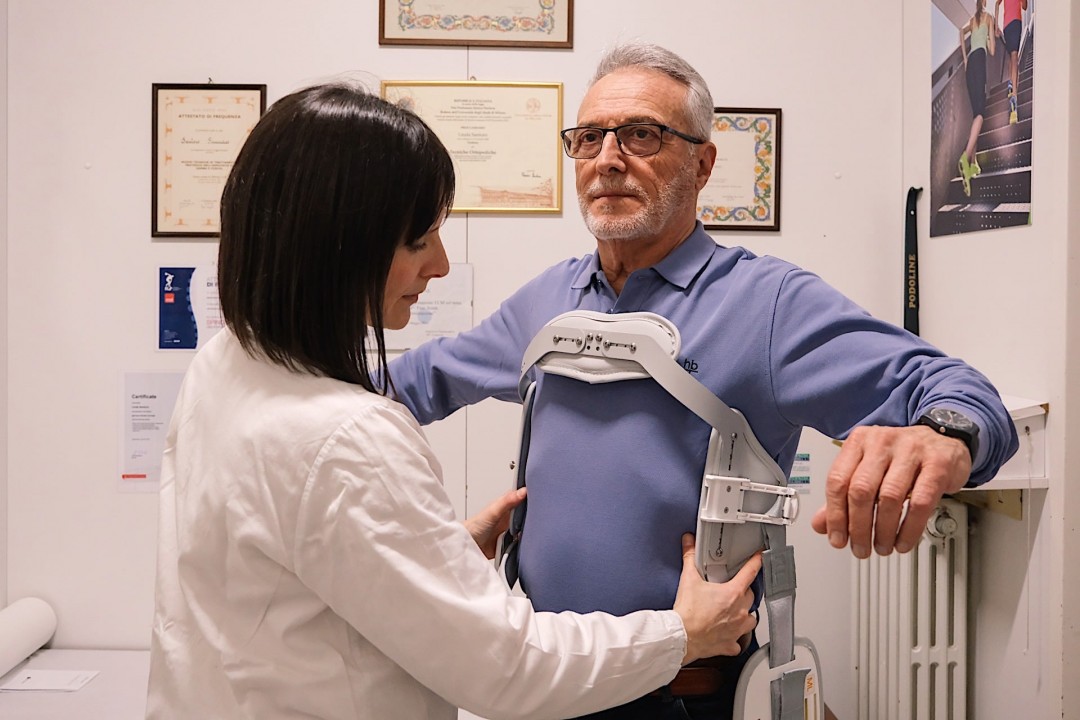
Fitting and Role of the Orthopedic Technician
The effectiveness of a C35 hyperextension brace depends on proper fitting and adjustment, which must be carried out by qualified healthcare professionals, specifically certified orthopedic technicians.
To ensure effectiveness, the orthopedic technician:
- adapts the brace to the patient’s body shape
- adjusts lateral bars and support points
- checks correct positioning of components
- ensures comfort and stability during use
A properly adjusted brace should support the spine without creating excessive pressure or overly restricting breathing and movement.
Ongoing monitoring is essential to allow adjustments based on the patient’s clinical progress.
Duration and Use
The duration of use of the C35 hyperextension brace varies depending on the condition and severity of the spinal issue.
In many cases, the brace is worn:
- during daytime hours
- while walking and performing daily activities
- for a period ranging from a few weeks to several months
The duration of treatment is determined by the physician based on clinical and radiological follow-ups.
Evolution of Spinal Orthoses
Modern hyperextension braces like the C35 are designed to ensure stability and comfort through lightweight and adjustable materials.
Recent innovations include:
- more ergonomic designs
- quick adjustment systems
- breathable and lightweight materials
- improved adaptability to patient anatomy
These improvements make the orthosis more comfortable and increase adherence to treatment.
Conclusions
The C35 hyperextension brace is an orthopedic device designed to stabilize the spine and limit forward bending, promoting an extended posture. It is an effective solution in the conservative treatment of vertebral fractures, osteoporotic collapses, and certain spinal disorders.
With proper medical prescription and expert fitting by an orthopedic technician, the brace helps reduce pain, protect the vertebrae during healing, and improve quality of life. Integration with specialist follow-ups also supports a gradual and safe functional recovery.
Book a Consultation
If you have been prescribed this type of brace, contact us at +39 035 212110 or email info@ortopediazambelli.it.
Our orthopedic technicians will be available to assist with the fitting and application of the hyperextension brace.