Carpal Tunnel Syndrome: Why Wrist Pain Should Not Be Ignored and How to Manage It Effectively
Introduction
When discomfort appears in the wrist, it is often attributed to fatigue or a long day at the computer. At first, the most common symptom is a mild tingling sensation in the fingers—something that comes and goes and does not seem particularly worrying. Yet behind these seemingly harmless signals may lie Sindrome del tunnel carpale, a condition involving the median nerve and the proper functioning of the hand.
Over time, that small discomfort can turn into more persistent pain, especially at night. Many people report waking up with their fingers feeling “asleep,” as if blood circulation in the wrist were reduced and the hand stiff.
The most insidious aspect of carpal tunnel syndrome is its gradual onset. It does not appear suddenly but develops slowly through subtle signs that are often overlooked. As a result, the condition is frequently recognized late, when the median nerve is already under continuous stress.
Understanding what is happening is essential to prevent the disorder from interfering with daily life. Simple activities such as writing, cooking, or gripping objects become less natural and more tiring, especially when tingling evolves into reduced sensation.
In this article, we will clearly explore what carpal tunnel syndrome is, how it develops, what solutions exist, and when it is useful to consult an orthopedic specialist to protect the function of the wrist and hand.
What carpal tunnel syndrome is
Sindrome del tunnel carpale occurs when the anatomical passage in the wrist, known as the carpal tunnel, becomes too narrow for the median nerve to pass through. This nerve is responsible for sensation in part of the hand and for controlling some essential movements.
When the space narrows, the median nerve becomes compressed and begins to send altered signals. This is when symptoms such as tingling, numbness, and sometimes weakness in hand grip appear.
It is not an abrupt illness but a progressive condition affecting the wrist over time. Tendons passing through the carpal tunnel may become inflamed, increasing internal pressure and worsening compression of the median nerve.
How it develops over time
The mechanism behind carpal tunnel syndrome is linked to a combination of factors affecting the wrist. Repetitive movements, poor posture, and prolonged strain on the hand can contribute to inflammation of the tissues surrounding the median nerve.
Gradually, the passage becomes narrower, and tingling becomes more frequent. At first it may appear only at night, but later it can occur during the day as well, especially during repetitive hand activities.
The key issue is that the median nerve suffers from continuous pressure. If the wrist is not properly supported, the condition tends to progressively worsen.
Benefits of early intervention
Acting in the early stages of Sindrome del tunnel carpale helps reduce pressure on the median nerve and improve hand function. Wrist support, especially at night, can significantly reduce tingling.
Main benefits include:
- reduction of nighttime and daytime tingling
- improved hand control in daily activities
- decreased pressure on the median nerve
- better stability of the wrist
- prevention of symptom progression
Early intervention often helps avoid more invasive treatments while preserving natural hand function.
When it is important to intervene
Recognizing the right time to address carpal tunnel syndrome is essential. A painful wrist should not be ignored, especially when tingling becomes frequent and interferes with daily tasks.
It is advisable to investigate the condition when:
- tingling occurs frequently in the hand
- the wrist feels stiff or painful
- there is reduced sensation in the median nerve area
- grip strength in the hand decreases
- symptoms worsen at night
In these cases, orthopedic support can help stabilize the wrist and reduce pressure on the median nerve.
Specific insights
The role of wrist braces
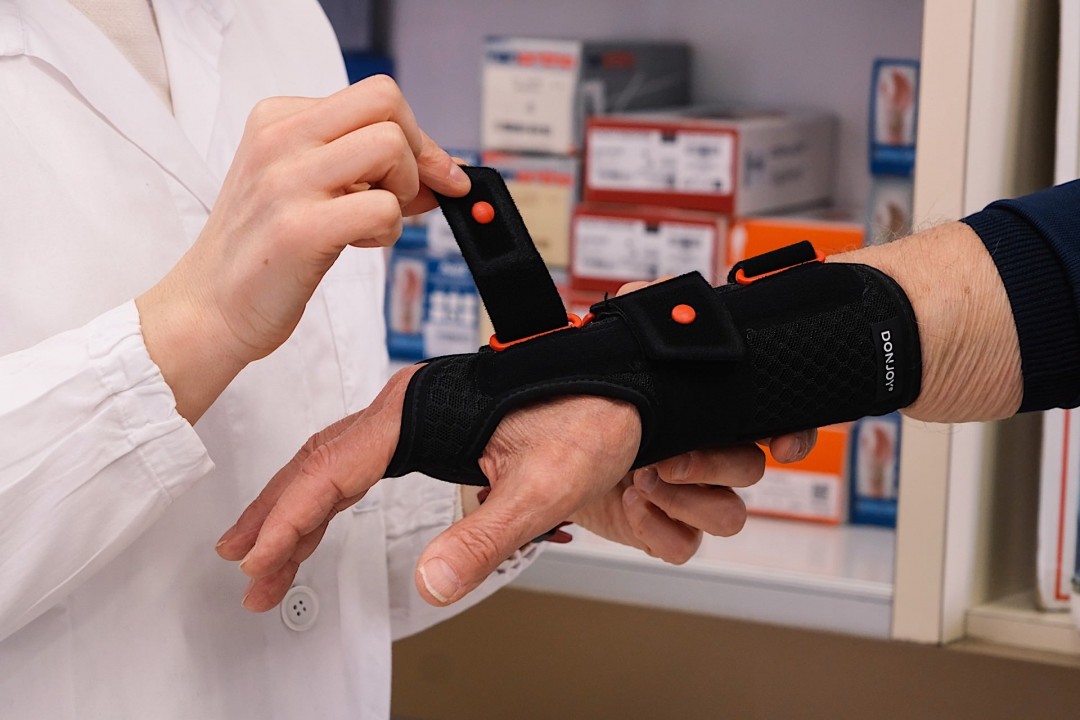
Wrist braces are essential tools in managing Sindrome del tunnel carpale. They keep the hand in a neutral position, reducing pressure on the median nerve and limiting tingling.
They are especially useful at night, preventing involuntary wrist movements that may worsen compression.
Difference between night and daytime use
During sleep, the wrist tends to bend, increasing pressure inside the carpal tunnel. That is why night support is often the first step in reducing tingling and protecting the median nerve.
During the day, the focus shifts to improving hand posture and reducing repetitive movements that stress the wrist.
Available support types
Different supports exist for carpal tunnel syndrome, ranging from rigid to more flexible braces. The choice depends on the condition of the median nerve and the severity of tingling in the hand.
Proper fitting on the wrist is essential to achieve real benefits.
How the treatment works
Treatment of Sindrome del tunnel carpale with orthopedic support is simple but requires consistency. A brace is applied to the wrist, keeping the hand stable and reducing pressure on the median nerve.
The typical process includes:
- assessment of wrist condition and tingling symptoms
- selection of the appropriate hand support
- regular application of the wrist brace
- monitoring response of the median nerve
Over time, reduced tingling becomes noticeable and hand function improves.
Precautions and contraindications
Not all cases of carpal tunnel syndrome can be managed with wrist support alone. When the median nerve is significantly compromised, more advanced medical treatment is required.
Persistent tingling or loss of hand strength should not be ignored, as they may indicate advanced wrist compression.
Conclusion
Sindrome del tunnel carpale often begins silently, with small signs such as tingling or mild discomfort in the wrist. Over time, these symptoms may involve the median nerve more significantly, making everyday hand movements more difficult.
Early intervention helps protect hand function and reduce pressure on the wrist, preventing worsening of the condition. Orthopedic solutions, especially braces, provide practical support to stabilize the area and reduce tingling, particularly in early stages.
The goal is not only pain relief but preservation of everyday autonomy: writing, working, cooking, or simply holding objects without discomfort. When the median nerve is less compressed, the entire hand system functions more smoothly.
A specialized orthopedic center can guide the selection of the most suitable device for the wrist, carefully evaluating symptoms of carpal tunnel syndrome and providing a personalized solution. This is crucial because every hand has different needs, and each situation requires a tailored approach.
If the described symptoms feel familiar, it is advisable not to wait until tingling worsens or wrist strength declines. Consulting a professional can make a real difference in recovery and help restore comfort and confidence in everyday hand movements.