Cervicalgia: Cervical Collars and Orthopedic Pillows to Relieve Neck Pain
Introduction
Do you wake up with a stiff neck or experience pain after spending many hours in front of the computer? Cervicalgia, commonly known as neck pain, is a very common condition that can affect quality of life, sleep, and even concentration throughout the day.
Neck pain is often underestimated, but when the discomfort becomes frequent it is important to understand its causes and identify solutions that can truly help. Among the most commonly used remedies are cervical collars and orthopedic pillows, simple yet highly effective tools when chosen correctly.
What Is Cervicalgia?
Cervicalgia is pain localized in the neck area, corresponding to the cervical spine. It may appear as a mild and occasional discomfort or become persistent and limit everyday movements.
It is not a specific disease, but rather a symptom that can have different causes. In some cases, the pain remains concentrated in the neck, while in others it may radiate toward the shoulders, arms, or head.
The cervical spine is a highly stressed part of the body: it supports the weight of the head and is constantly involved in daily movements. For this reason, poor posture, muscle tension, or stress can easily cause discomfort and stiffness.
Causes and When It Occurs
Cervicalgia can appear for many reasons. One of the most common causes is poor posture maintained for many hours, especially while working at a computer or using a smartphone for extended periods.
Stress can also contribute to the problem, as it tends to tighten the muscles of the neck and shoulders. In other cases, the pain may be related to sudden movements, drafts, injuries, or age-related conditions such as cervical osteoarthritis.
The condition often occurs:
- upon waking up;
- after sitting for many hours;
- during periods of high stress;
- after physical strain or sudden movements.
Main Symptoms
The symptoms of cervicalgia may vary from person to person. The most common symptom is neck pain, often accompanied by stiffness and difficulty moving the neck.
Many people also report:
- shoulder tension;
- headaches;
- a feeling of heaviness;
- pain radiating toward the arms and back;
- tingling or mild numbness;
- nausea (much less common).
In some cases, the discomfort becomes worse during the night or after maintaining the same position for a long time.
Solutions and Remedies
The good news is that, in most cases, cervicalgia can be managed with simple daily habits and the support of appropriate orthopedic devices.
1. Cervical Collars
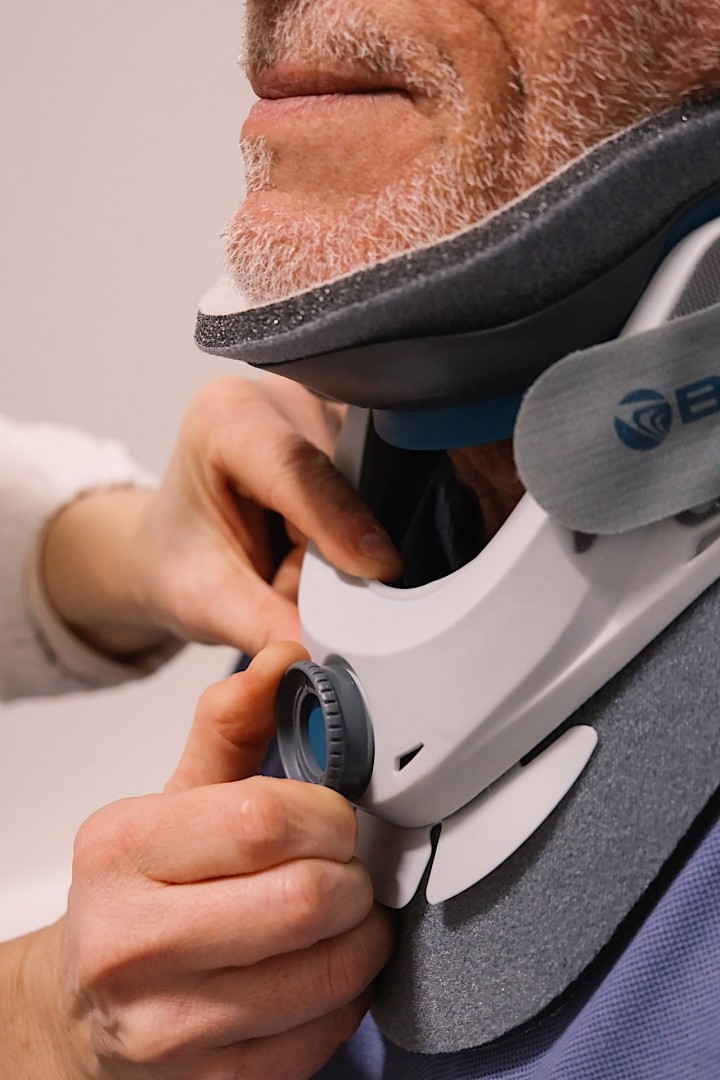
A cervical collar helps support the neck by relieving tension in the cervical muscles and limiting movements that may cause pain. It is often used in cases of inflammation, muscle contractures, or after minor injuries.
It is important to use cervical collars correctly and only for the period recommended by a specialist or orthopedic technician, avoiding excessively prolonged use.
Different models are available, ranging from softer versions to more supportive ones, depending on the prescribed therapy or the individual’s needs.
2. Orthopedic Pillows
An orthopedic pillow is one of the most useful tools for people suffering from cervicalgia, especially when pain appears upon waking.
A good pillow helps keep the neck in the correct position during sleep, reducing muscle tension and improving rest quality.
Choosing the right pillow should take into account sleeping position, body structure, and personal habits. Today, many cervical pillows are designed to promote better rest by relaxing the cervical area. From the simplest soap-shaped model to double-curved and butterfly-shaped versions, all are designed to provide optimal neck support, ensuring comfortable sleep and pain-free mornings.
3. Posture Shirts
Poor posture caused by incorrect habits is often responsible for cervical spine discomfort. Taking care of posture through small daily exercises and using supports such as posture shirts can help improve painful symptoms and promote overall well-being.
But how does a posture shirt work? Unlike traditional posture braces, it works through biofeedback. Specific fabric structures stimulate the body's proprioceptive abilities — particularly through the skin — encouraging musculoskeletal activation involved in posture control.
In our next article, we will discuss this highly interesting and supportive device in greater detail.
Other Helpful Tips
Even small daily changes can make a significant difference in managing cervicalgia:
- maintaining correct posture;
- taking breaks during sedentary work;
- performing gentle stretching exercises;
- avoiding sudden movements;
- using an ergonomic workstation.
In many cases, combining healthy habits with proper orthopedic supports leads to significant improvement.
When to Consult a Specialist
If neck pain lasts for several days, worsens over time, or is accompanied by symptoms such as tingling, dizziness, or severe movement limitation, it is important to consult a specialist.
A professional evaluation helps identify the cause of the problem and choose the most appropriate treatment, avoiding improvised or unsuitable solutions.
Even in cases of recurring pain, seeking professional advice is useful to prevent worsening symptoms.
The Role of the Orthopedic Technician and Orthopedic Advice
An orthopedic technician can help choose the most suitable device according to the individual’s needs, evaluating comfort, support, and proper use.
Every situation is different: a collar or pillow chosen without proper guidance may not be effective. For this reason, it is important to rely on professionals who can recommend the best solution.
At an orthopedic store, it is possible to receive personalized advice regarding:
- the type of cervical collar;
- choosing the right orthopedic pillow;
- proper use of supports;
- maintenance and replacement of devices.
Proper support can significantly contribute to daily well-being and improve both sleep quality and posture.
Conclusion
Cervicalgia is a very common condition, but in many cases it can be effectively managed with attention, prevention, and the right orthopedic supports.
Cervical collars and orthopedic pillows are valuable tools for reducing pain, improving posture, and supporting recovery. However, choosing the correct device is essential.
Turning to a specialized orthopedic store allows people to find personalized solutions better suited to their daily needs.
FAQ
Can a cervical collar be worn all day?
No, cervical collars should generally only be used for the period recommended by a doctor or orthopedic technician. Excessive use may weaken the neck muscles.
What is the best pillow for cervical pain?
There is no one-size-fits-all solution. The ideal pillow depends on sleeping position, body structure, and the type of neck pain experienced.
Can cervicalgia go away on its own?
In many cases, pain improves with rest, correct posture, and small daily adjustments. However, if the problem persists or worsens, a specialist evaluation is recommended.
All the news